A consistent frame.
A living drawing.
The existing dark CarbonPod identity supports warm-paper artwork. Keep the composition steady; let pencil marks and material tell the story.
Colour has a job.
Canvas#07090A--pod-canvas
Artwork paper#F3EBDB--pod-art-paper
Charcoal ink#242820--pod-art-ink
Muted artwork ink#5B6053--pod-art-muted
Harvest gold#D9B978--pod-gold
Signal lime#8AE04A--pod-signal
Signal emerald#12B76A--pod-signal-2
Paper signal#0E8F57--pod-paper-signal
Use semantic tokens in the interface. Natural illustration pigments may vary within the palette, but the background stays consistent throughout a film.
Preserve the CarbonPod voice.
Another life
after harvest.
A compact kiln. A local collection network. A record that follows every batch.
THE SYSTEM / IN DEVELOPMENT
The metadata preview uses a monospace fallback where IBM Plex Mono is unavailable locally.
Give the copy breathing room.
Carbon, given
a longer life.
Use charcoal copy in reserved paper space, with the material illustration below.
Explore the motion reference →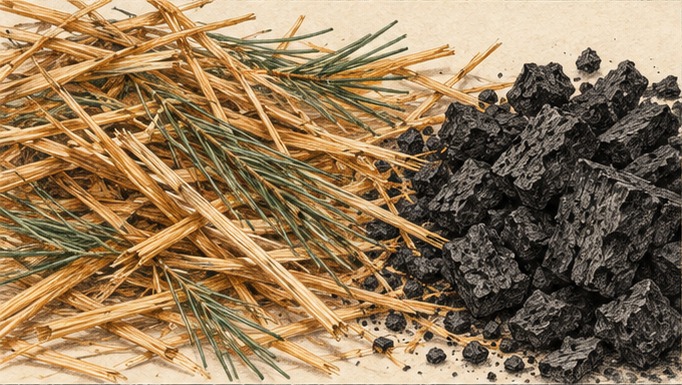
Card rules
- Warm paper, charcoal type, generous negative space.
- 28px corners and a restrained border.
- Keep text away from dense botanical detail.
- Use clear links, 44px hit areas and visible keyboard focus.
- Do not blur or heavily shade the illustration to rescue a crowded layout.
This is a documentation example, not a new website route.
Protect the whole drawing.
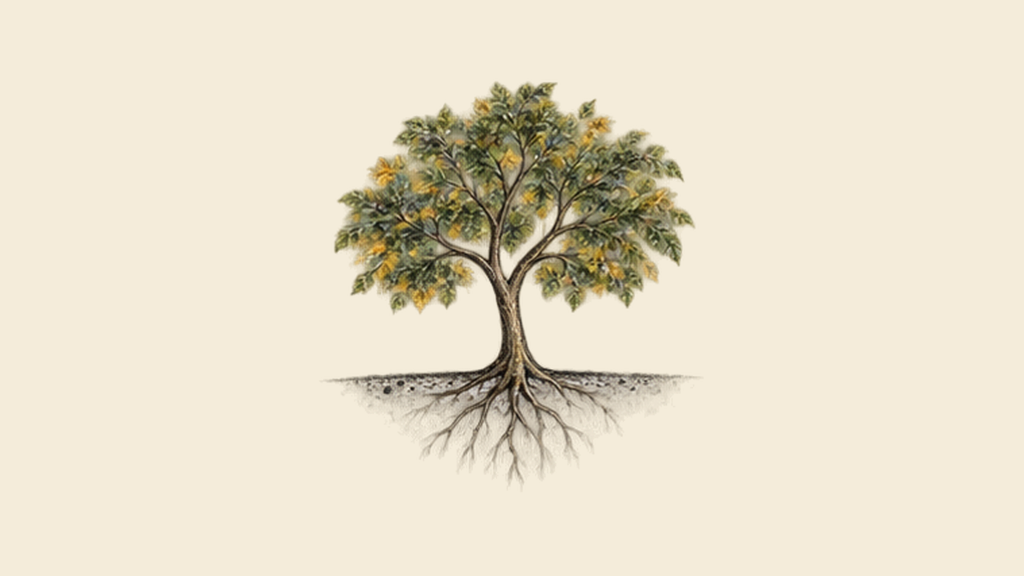
Uniform scale. Shared ground anchor. Safe space above the crown and below the roots.
Framing rules
- Fixed camera and soil height.
- One scale and translation for each complete plant/root drawing.
- No independently stretched upper and lower halves.
- Transparent artwork over one paper colour.
- Review portrait crops separately; never cut the crown to fill a phone.
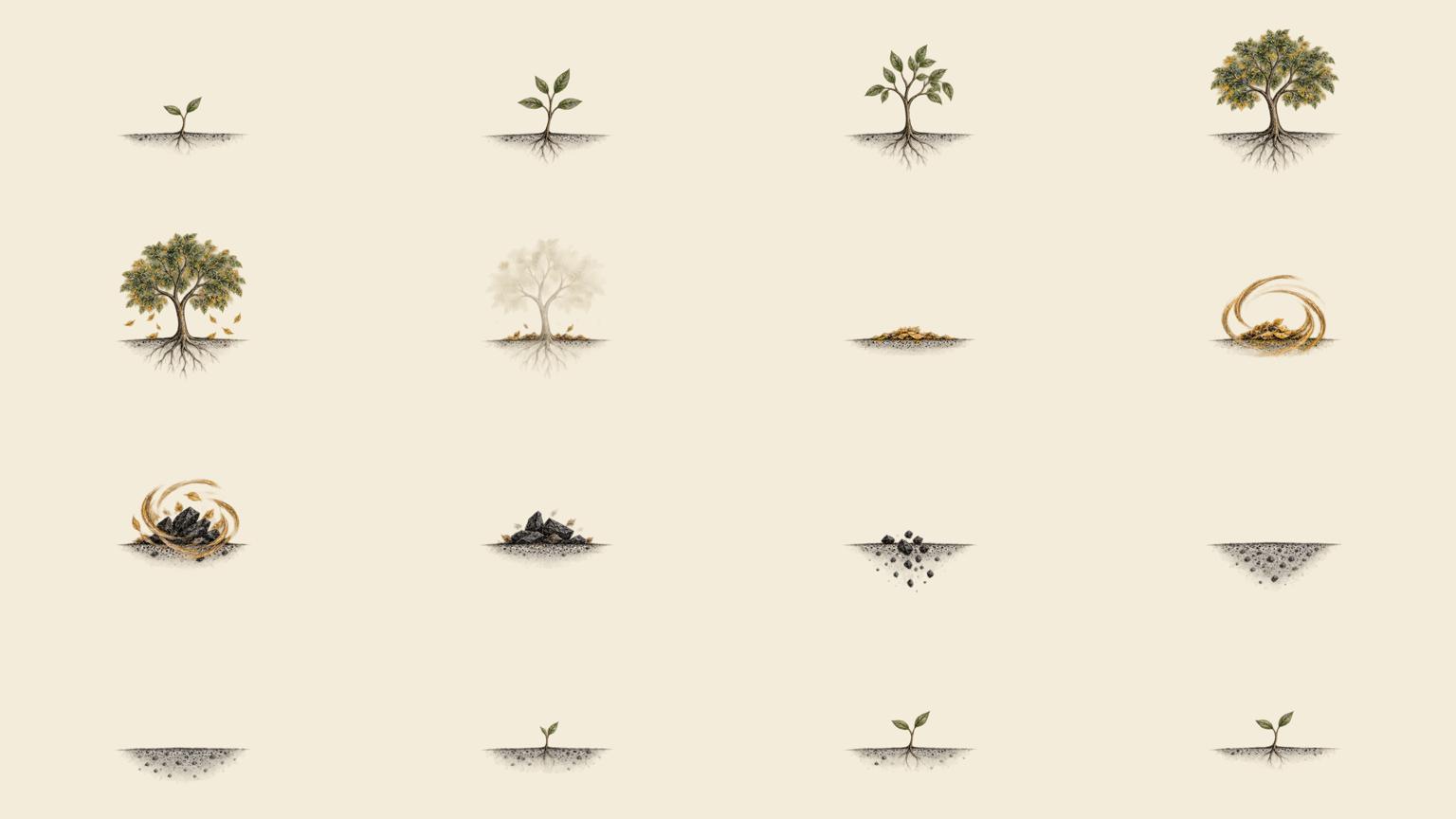
Sixteen seconds. One cycle.
Playback starts only when requested. One continuous story; matched sapling at both ends.
Sequential sketches and brief ink dissolves are permitted. Keep line boil in individual strokes, not in the camera, paper boundary or ground surface. Above and below ground must both participate.
The guide uses explicit playback controls. The current website’s control-free autoplay treatment remains a documented accessibility tradeoff; reduced-motion posters still apply.
Plan. Draw. Inspect. Export.
| Stage | Check before advancing |
|---|---|
| Plan | Define each narrative beat, plant/root state, carbon movement, duration and exact loop seam. |
| Draw | Create stem, branches and roots together. Preserve identity, texture and organic anatomy. |
| Inspect every key | Small sapling roots; coordinated growth and fading; no roots during conversion; changing charcoal below ground; full crown/root clearance. |
| Register | Shared ground anchor, constant background, consistent whole-frame scale. No paper rectangles or tiled soil. |
| Export | Matching first/last frames, sixteen-second film, full-frame GIF records. HLS, MP4 and poster delivery for the website. |
| Review the film | Check shifting, flashes, abrupt morphology changes, clipping, static lower strips and seam continuity. File checks alone are insufficient. |
| Review the UI | Desktop and 375px layout, contrast throughout, keyboard links, reduced motion, visibility handling and failed-media fallback. |
Take the DLS into the feed.
Use dedicated portrait, square, landscape and vertical canvases. Preserve the palette, typography, mark and plant/root coherence. Recompose the artwork instead of cropping a website hero.